About the Workshop
The Internet of Things(IoT) and Edge Computing are undergoing a fundamental transformation. What began as a largely cloud-dependent ecosystem of passive, data-collecting sensors is evolving into a distributed mesh of multi-layered intelligent, decision-making devices. These IoT and Edge nodes, ranging from milliwatt-powered environmental sensors and wearables to microcontroller-driven robots, industrial actuators, and vehicle subsystems, are becoming the first and often the only computational point capable of responding to real-world events. These devices operate under severe constraints, limited compute, intermittent connectivity, strict privacy requirements, and tight energy budgets.
In such conditions, autonomic computing becomes essential - devices must be able to configure themselves, continuously optimise their behaviour, recover from faults, and adapt to changing conditions without external intervention. Autonomous agents that perceive, reason, plan, act, and learn and autonomic computing, self-configuring, self-healing, self-optimising behaviours, should provide the foundational principles for this shift. Recent breakthroughs in small language models (Phi-3-mini, MobileLLaMA, TinyLlama), TinyML frameworks, extreme NN quantisation, and microcontroller-grade NN accelerators have made it realistic to run sophisticated reasoning and self-management directly on devices alongside the main application.
AutoEdge focuses on this convergence of Agentic AI and Autonomic Computing at the extreme edge. The workshop explores how to design, deploy, and manage IoT systems that are truly self-managed and resilient, autonomously maintaining reliable operations in various application domains such as smart buildings, smart cities, connected/autonomous vehicles, healthcare devices, and industrial settings.
By bringing together the MobiSys systems community with researchers in agentic AI and autonomic computing, this workshop aims to accelerate the transition from cloud-dependent IoT to resilient, intelligent, and self-sustaining edge ecosystems.
Topics of Interest
We invite submissions on a wide range of topics including, but not limited to:
- Agentic AI frameworks and reasoning loops on resource-constrained devices
- Autonomic control policies for self-configuration, self-healing, self-optimisation, and self-protection in IoT systems
- Small language models and TinyML for on-device perception, planning, and decision making
- Energy-efficient scheduling and continual learning for IoT and Edge agents
- Multi-agent collaboration and swarm intelligence over unreliable wireless networks
- Autonomic resource management and orchestration in heterogeneous IoT-edge continuum
- Anomaly detection, fault diagnosis, and predictive maintenance using autonomic and agentic techniques
- Middleware and programming models for developing agentic/autonomic IoT applications
- Benchmarks and evaluation methodologies for extreme-edge autonomy
- Real-world deployments and case studies showing autonomous management in:
- Smart buildings and smart homes
- Smart cities and urban infrastructure
- Connected and autonomous vehicles (CAV)
- Smart healthcare and wearable devices
- Industrial IoT and smart manufacturing (Industry 4.0/5.0)
- Agriculture, environmental monitoring, and disaster-response systems
Important Dates
- Paper Submission Deadline: 1 March, 2026
- Notification of Acceptance: 22 March, 2026
- Workshop Papers Camera-Ready: 15 April, 2026
- Workshop Date: June, 2026
*All deadlines are Anywhere on Earth (AoE).
Submission Guidelines
Authors are invited to submit original and unpublished work, which must not be submitted concurrently for publication elsewhere, in the following format:
- Full paper (6 pages): Interesting, novel results or completed work on topics within the scope of the workshop.
- Extended Abstracts (2 pages): Working, presentable systems or brief explanations of a research project. This submission must be accompanied by a poster and a short talk during the workshop.
This workshop will strictly follow the MobiSys 2026 submission guidelines. We will ensure the workshop is inclusive by strictly adhering to the
ACM Publications Policies and Procedures page.
For each accepted paper, at least one author is required to register and attend the workshop in-person to present their poster/paper on-site.
The MobiSys 2026 workshop proceedings will be published in the ACM Digital Library.
Submission Portal: Submit papers via TBD.
Organizing Committee
General Chairs

Dr. Tomasz Szydlo
Senior Lecturer (Associate Professor) at Newcastle University, UK

Dr. Devki Nandan Jha
Lecturer (Assistant Professor) at Newcastle University, UK

Dr. Rehmat Ullah
Senior Lecturer (Associate Professor) at Newcastle University, UK

Dr. Lorenzo Carnevale
Assistant Professor at University of Messina, Italy
Program Committee Members
- Rajiv Ranjan: Newcastle University, UK Email
- Omer Rana: Cardiff University, UK Email
- Aditya Indoori: Amazon, USA Email
- Ajay Nagrale: Meta, USA Email
- Neetesh Kumar: IIT Roorkee, India Email
- Ali Raza: Honda Research Institute Europe, Germany Email
- Muhammad Salahuddin: EURECOM, France Email
- Sajjan AVS: Amazon, USA Email
- Martin Higgins: Canadian Nuclear Labs, Canada Email
- Aleksander Slominski: IBM TJ Watson, NY, USA Email
- Kamil Faber: AGH, Poland Email
- Theodoros Spyridopoulos: Cardiff University, UK Email
- Shashikant Ilager: University of Amsterdam (UvA), Amsterdam Email
- Danny De Novi: University of Messina, Italy Email
- Stefan Nastic: TU Wien, Austria Email
- Daniel Balouek: Inria, France Email
- Reza Farahani: Klagenfurt University, Austria Email
Workshop Program
Keynote Speaker
Dr. Rishad Shafik, Professor in Microelectronic Systems at the School of Engineering, Newcastle University, UK.
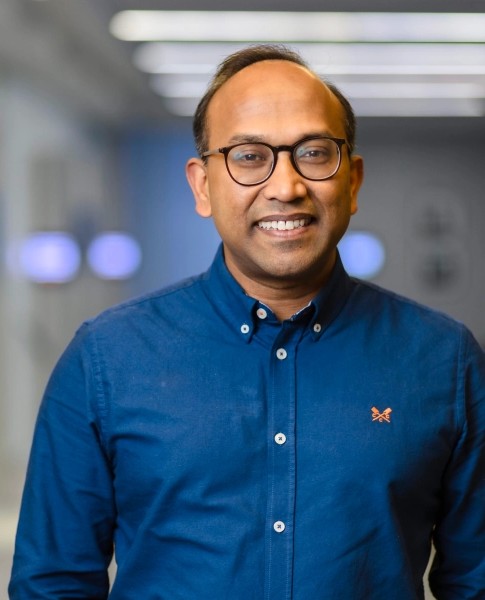
Prof. Rishad Shafik
is a Professor in Microelectronic Systems within the Microsystems Research Group and the Director of the new Microsystems AI (MAI) Lab. He received PhD and MSc (with distinction) degrees from the University of Southampton in 2010 and 2005, and BSc in Electronic Engineering degree (with distinction) from the IUT, Bangladesh in 2001. He is an editor of the Springer USA published book - "Energy-efficient Fault-Tolerant Systems" and author/co-author of more than 200 research articles published in leading conferences and journals. Seven of the articles he co-authored were nominated for best paper awards, four of which won the best paper/poster awards. He is also a visiting researcher at CAIR, a Member of IET and a Senior Member of IEEE. He recently co-founded Literal Labs. For more information, please visit his personal website at: https://www.staff.ncl.ac.uk/rishad.shafik/.Contact Us
For any inquiries regarding the workshop, please contact MIND chairs at: